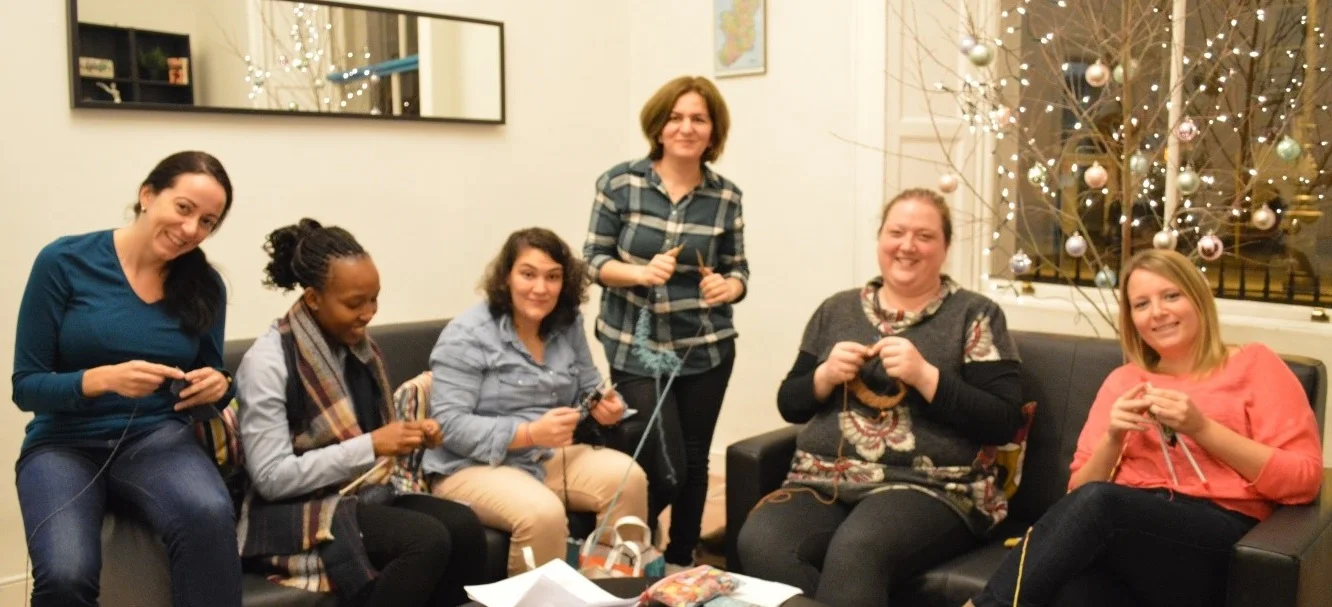
Join our YWCA knitting group!
On Saturday the 13th of October 2018, three of our Resident Assistants had the opportunity to attend an Advocacy and Communications training workshop on Human Trafficking and Prostitution in Ireland organised by YWCA Ireland and Tearfund Ireland and hosted by YWCA Coolnagreina.
One of our RA's, Evita Volginaite reflects on the day:
The workshop was completely sold out and packed when we arrived despite the rainy weather. We were glad to see such a diverse group of people from a wide variety of different backgrounds. Most of the people attending the workshop were already working with some charity and wanted further training in this specific field, others were college students just wanting to know more information and ways that they could get involved in advocacy in Ireland. Needless to say, the workshop was applicable to everyone who was there and we all learnt something new.
The morning kicked off with an address from Ally McGeever, the Young Women's Engagement and Development Officer of YWCA Ireland who spoke about the safe space policy of YWCA Ireland and reiterated that everyone's opinions are valued and respected here and we shouldn't be afraid to ask any questions. Ally then introduced the first speaker, Sarah Benson the CEO of Ruhama. Sarah took an unconventional approach to her talk and had a Q&A session before she spoke to make sure she would cover all our questions in her talk. She went on to explain what Ruhama is and what they do. Ruhama is a voluntary organisation in Ireland who work to support women affected by prostitution and other forms of commercial sexual exploitation. If you would like to read more information about their work their website is: https://www.ruhama.ie/
Sarah gave us a brief introduction into the laws both in Ireland and internationally regarding the laws around prostitution. She also showed us some demographics of where the women who are being trafficked into Ireland are coming from and why. She shared about the present focus of the work of Ruhama and how we can help out.
The next session was called "Real Women/Real Stories" where 3 women shared about the advocacy work they do in Ireland and abroad with their organisations and some of the ways we can partner with them. Hearing their personal stories on how they are fighting for injustices worldwide gave me hope and motivation to do something, anything, to help others who don't have the same opportunities as me or who are not in a position where they can freely speak out for themselves.
After a quick coffee break and interesting chats with the other attendees, we moved on to the Advocacy Training session with Tearfund Ireland led by Gemma Kelly. What really struck me from her talk was when she put up the bible verse that said "..speak up for those who cannot speak for themselves.." (Proverbs 31: 8-9). God cares for people and wants us to care for them too especially the ones who are most vulnerable. Gemma spoke about the meaning of advocacy and how a lot of people use the word casually and don't always know what it means. She gave us some different definitions but her point was that advocacy is looking at the root causes of problems and actively working towards finding solutions. She then went on to talk about the "Sphere of Influence" we all have and we had to break into groups and talk about our own sphere of people we know and who we could influence from friends and family, the people we work with, social media, politicians and after a few quick steps and contacts we could reach the bigger organisations like the United Nations. She made it sound possible for anyone to make a big impact through a few steps. I found this so encouraging and uplifting. Change is possible and it is not as difficult to achieve as we make it seem in our minds.
Gemma went on to give us the steps in advocacy and focused on research in particular. To advocate for any change you need to know your audience, your opponents, your facts and the more you know about what you are fighting for the better.
Our next speaker was Ruth Garvey-Williams who is the editor of Vox magazine. She shared about communication and what makes a good communicator. She had put up different headings of different types of communication and made everyone participating walk around the room and tick the headings appropriate to them. I really enjoyed this exercise because I always thought I wasn't a very good communicator since I "strongly dislike" public speaking of any kind and get so nervous any time I have to make a speech or give an opinion out loud, but walking around the room I realized there were SO many different ways I could communicate be it through writing, singing, taking a photo, making a video, drawing, sending emails, talking one-on-one with somebody or expressive dancing (I can't do that either but I liked having the option there).
After all that training and thinking we were so delighted to have lunch. The food at Coolnagreina never disappoints. After lunch we were able to spend some time just reflecting on what we had learnt so far and how it could be applied to our lives and what we do. There were stations around the venue that we could go to to reflect in ways that suited us, some people just chatted, some walked around and the artsy people crowded the art room to create some reflective art pieces. I loved having the opportunity to paint in the middle of a busy day, it was something different but it definitely made me slow down and think about all the things I heard in the morning and how I could help make a difference for other people.
The afternoon session was all about planning action. We used the SMART method: Specific, Measurable, Attainable, Relevant and Time focused. We came up with 3 plans for advocacy each (both personal and communal) that we could break into small achievable steps. We then shared those with everyone else and discussed them further. By the time the workshop was finished we had 150 plans for action! It was a truly productive and informative day and I am really looking forward to the next workshop that YWCA Ireland will organize.


Over the course of one week in December, I attended not one, but two events relating to violence against women in conjunction with the 16 days of activism against gender based violence (GBV). I wish events like this were not necessary and that this problem were already solved. However, it is not, and therefore events like this are necessary to bring the problem of GBV to the fore, so successes can be highlighted, and problems solved. I had the pleasure of learning from a range of speakers and hearing from people experienced in this field throughout both events.
The first event was on the 8th December two RAs and two staff from the YWCA had the pleasure of attending The Istanbul Convention, Women Seeking Justice: Prosecution for Violence Against Women event organized by the European Parliament and the Irish Observatory on Violence Against Women.
This consisted of speakers and a panel with questions and answers. This event focused on strengthening laws to send the message that GBV is not acceptable; however, it is understood that while strong legislation is critical, it is only one part of the solution. One of the biggest challenges identified was getting women to realise that what may be happening to them is a crime. Another challenge discussed was the difference between prosecutions of assault in public and private places with Gardai having different powers in each of these circumstances.
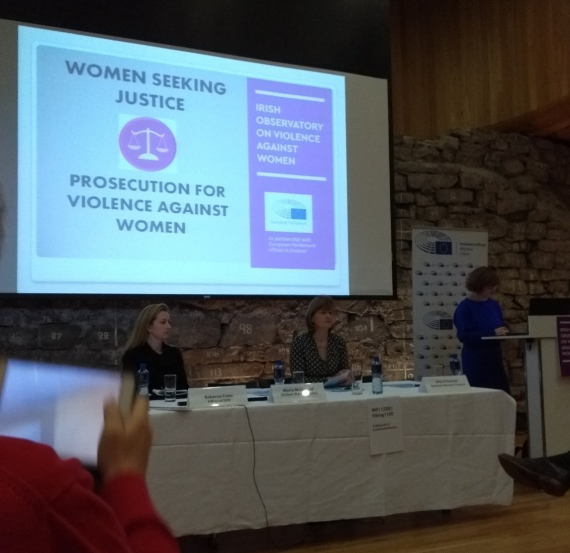
The speakers stated the need to learn from other countries who deal better with these issues, such as Scotland. Additionally, women need to be aware of their rights and all women need targeted, including those who are illiterate, non-residents etc; therefore, the information given to women needs to be in a format that all can understand. Some small improvements were suggested such as a simpler leaflet being created by the Gardai to direct women to services, as well as the shortening of the legal and court process to reduce the mental, physical, and emotional stress it currently presents.
The second event was on the 13th December in Trinity College Dublin and was titled ‘Reducing and preventing gender based violence: how can we improve programme design?’. This event was organised by Christian Aid Ireland to look at different policy approaches to development and to understand how these can be more effective at interventions against and preventing GBV.
“Violence is an impediment to development”
Violence is an impediment to development – this was a statement made in the opening remarks and is one with which few could argue. Looking at the local and global spheres, violence breeds inequality and hinders progress economically or socially within a country or community. It was discussed how any kind of social exclusion needs to be combated to reduce gender inequalities. Key principles and lessons from research in different communities was discussed to provide a basis for researchers and policy-makers in the room to build on. The importance of interventions being survivor and community-led, as well as holistic and context-specific was outlined. No one solution will fit all scenarios but instead the individuals impacted need included in the process of reducing GBV for any improvement in gender equality to be successful.
Both events challenged and interested me especially because I am studying for my Masters in Development Practice. Gender equality and reducing GBV are things I am passionate about and form a basis of some of my course studies particularly for modules such as like Gender and Development which I will be studying next term. The importance of safe spaces when dealing with survivors was discussed, particularly in the second event, and this is something that the YWCA focuses on within its mission and values and this encouraged me in the key role that the YWCA has in combating GBV and improving gender equality in Ireland and abroad.
There was an observatory this past December regarding the justice process for cases of violence against women. Violence against women is an issue that has persisted and possibly grown over the years. One in three women surveyed reported that they faced violence physical and or sexual by an intimate partner or non-partner over the course of their life (http://www.who.int/mediacentre/factsheets/fs239/en/). Although surveys have noted such a large prevalence of these events, only eight percent report such incidences to gardai.
There are many variables that affect the process of justice for such cases including societal views, recognition of the violent act, gardai intervention strategies. The common question that needs to be addressed throughout the process is how are women being supported throughout the process? Unfortunately, victim blaming is a common occurrence, but the recognition of the issue and then being believed and feeling safe throughout the process is essential to lasting change and support for women who have faced violence. Recently, the definition of consent has been redefined to when someone freely and voluntarily agrees to the act, which can be withdrawn at any time prior to and during the act (http://www.irishstatutebook.ie/eli/2017/act/2/section/48/enacted/en/html). This new and discrete definition has allowed further clarity surrounding the issue of consent. Furthermore, clearly defined laws are necessary to prosecute and bring cases to any conclusion. Thus far the laws have not been specified to their fullest event. Yet, when they are clarified, they then need to be known by individuals and society at large so that people can identify the issues clearly. Prevention and programming for identifying unlawful acts can particularly be helpful during university because that is the age when a large percentage of the violence occurs. Hopefully through continued education, support for women in the midst of their cases, and preventative measures taken when possible, such cases of violence can cease or be severely limited.

Three days until Mother’s Day, 100 plants, 1 busy city centre street… The goal? To raise as much as possible for Tearfund with our own wee pop-up shop. How hard could it be? Harder than it looked, it would seem. The first hurdle we overcame was sourcing a supplier. Therese from Nightpark Nursery in Kildare came to our rescue. Her nursery was a wonder, with a beautiful selection of plants, as well as the added bonus of newly born piglets to marvel at, when business had been finished.

We had lots of lovely people stop by over the three days. Stand outs included a family of three children, their mom and their enormous Irish wolf hound – Dante. Each of them left with a plant of their own. Another was a young woman who bought 12 euro worth of plants, gave a twenty, and insisted we keep the change – “I’d be spending so much more if I’d bought my mum flowers in town… And she hates cut flowers, so she’ll be delighted with these”, and the personal trainer who stayed with us for an hour while he waited for a friend, and by the end he was encouraging passersby to pick up a plant too.
Friday evening turned into a late one as we chatted to Welsh and Irish fans on the way to a match in the Aviva; putting a smile on their face by blasting everything from Ed Sheeran to Thin Lizzy (we like to think that it was the good atmosphere, and not the fact that they’d had a drink or two already which meant they turned out to be a generous bunch).
The volunteers from the residence were wonderful through it all. Special mention to salesperson extraordinaire Sara, who stayed long beyond the call of duty and Marta and Ozlem who were heroes as ever, learning new flower wrapping skills in the process.
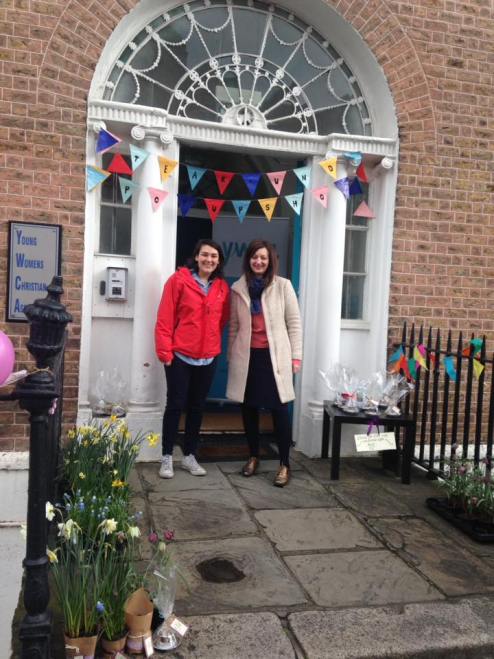
The sales from the three days, combined with sales from other YWCA centres meant that we were able to present over €500 to Tearfund. We know that money will go towards start up grants for businesses in Ethiopia, something that is making a real difference in the lives of real women; which we guess is what the YWCA vision is all about.
We think the main thing that stuck with us from the experience was the kindness of people, and how it’s always worth the little efforts to put a smile on someone’s face and to improve the lives of someone else, somewhere else. Let’s wait and see what our next fundraising trick will be.


This year we threw a celebration for International Women’s Day, on March 8th. Around 25 women joined us at different stages in the evening, representing eight different nationalities – Japanese, American, Venezuelan, Turkish, Spanish, Brazilian, Italian and Irish. The format was relaxed and language barriers and shyness were overcome over crackers, cheese and chocolate.
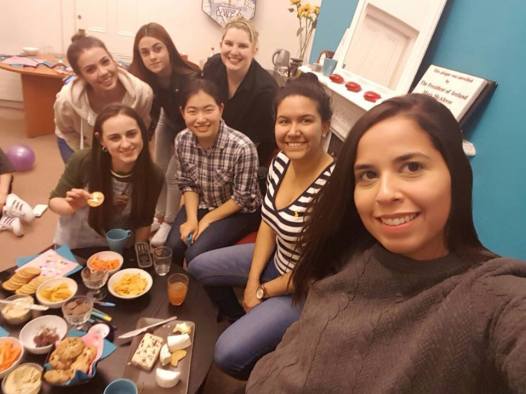
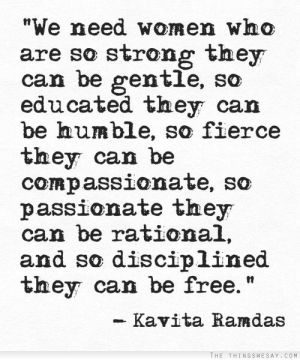
We had some discussion questions such as “who is the strongest woman you know?”, “what are the characteristics of a strong woman?”, “what have you done recently that you’re proud of?” and “what are you doing to empower women around you who might not be feeling so strong?” These were in no way easy questions to answer. It was special to hear people open up, particularly when talking about the strongest women they know. Mothers, perhaps unsurprisingly, featured strongly. There were a few tears in the room during this time, particularly as people recounted journeys of strength that they had undertaken in coming to Ireland to study and the people they had left behind.

The night ended with half of us sitting on the floor, playing with play dough someone had discovered in the room. You never can plan for these kinds of things, but it was an expression of natural creativity and a welcome break for some of the women present who had come straight from stressful jobs - from accounting to nursing and medicine.

The YWCA truly is an international organisation and it is one that celebrates strong women. It was special to be part of a evening that celebrated those things too.

Ever get a little sick of the average lunch time routine in the office? Maybe lunch no longer means a mental break, because you’re having the same conversation about last month’s turnover as you were having in the board meeting ten minutes ago, just with a cup of coffee and a sandwich in front of you. Maybe the gossip gets a bit heavy in the canteen, or maybe you keep falling into the trap of dropping a tenner on a nice lunch, losing half of your lunch break standing in a queue in the process.

As a partial remedy to this, YWCA runs a lunch hour every Friday in our residence on Baggot Street. It provides a relaxed space for both residents and people working locally to chill and chat – we also provide tea and coffee and plenty of scones and biscuits too! Therese, our most loyal lunch hour-er puts it like this –
“I love coming to lunch hour because it’s exactly the kind of cosy, restorative break I need during a long work week. It’s so nice to share a table and coffee with friends, old and new, and to listen to each other’s stories.”
Doing it has reminded us the importance of commitment, and recognizing that the value of doing something for a few can be equal to doing something for many. We’ve had great chats, and often learn something new too, with people from all over the world joining us at different points. We would absolutely love to have you pop in any week; we’re here every Friday from 1-2 at 64 Baggot Street Lower.
Unfortunately, sometimes we have to say goodbye to some important members of our team, in this case after many years of service.
How many years have you been working at the residence?
From 2003 to 2005 I lived here as an Assistant Manager and then, since 2008 until now, I have filled two roles Supervising and Cooking so around 10 years altogether.
What have been some of the Highlights of working here?
Building lasting friendships with both staff and residents. The biggest highlight has to be my god-daughter Lilly. Without the YWCA her mum, Ildiko, and I would never have met and become friends through our shared love of baking.

What will you miss most when you leave?
Most definitely the staff and residents. The way our kitchen is positioned has made for many a conversation while cooking and this was one of the most enjoyable aspects. Whether we spoke about the English language, homework, places to see round Dublin or Ireland, job searches, nights out, life’s highs and lows or just generally had a giggle it was great to be able to be part of people’s lives here in that way.
What are you doing next?
I’m moving in to an administrative role in property management. This was the aspect of my job here that I found I had most talent for and that allowed me to utilise my brain cells so I have trained to develop those skills and now want to focus more fully on that.
I have also recently been involved in setting up a not for profit, C-Squared Dublin, which seeks to build up the community of Smithfield (my local area) through creative community based programmes so I will continue to work on that, albeit with less time to spare. I’m looking forward to seeing that grow and develop.
What are you looking forward to about your new job?
Full time, regular hours. It is hard to work shifts for such a long period of time and I’m looking forward to some routine and a rhythm that will hopefully lead to a healthier lifestyle.
GOOD LUCK!
On behalf of all of the staff and residents we want to thank you and we will miss you.
Last Friday night we had a photo safari where the students were given the list below and sent out to take some pics.

They got some great shots and there were prizes involved.
Here are a few of my favourite shots:
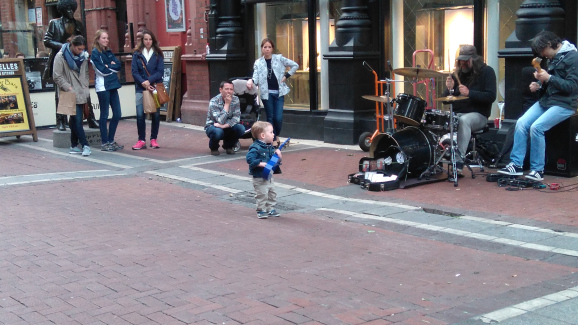
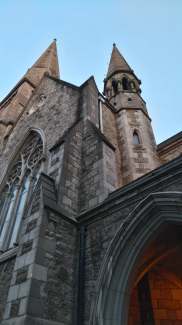

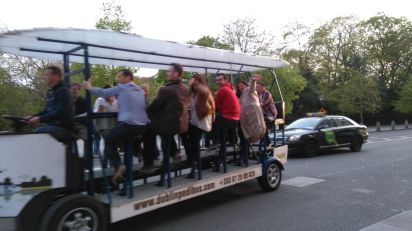
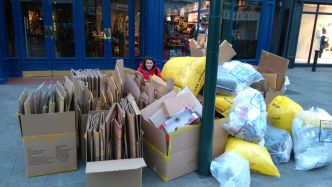
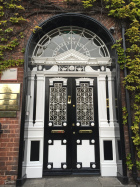
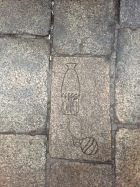


THANK YOU to everyone who took part.
A couple of Sundays ago we ran a silly games night. There were about 15 students that attended and we played a bunch of fun games……
Including:
Chinese Pictionary, which is a mash up of Chinese Whispers and Pictionary.

Charades
(I think this was meant to be sunburn)

The After 8 game, where you are required to get an after 8 from your forehead into your mouth….this one gets messy .

We also played gargle a song…unfortunately I didn’t manage to get a pic of that one.
Last but not least we played Sardines….and this is where I found them all…

We want to say a special THANK YOU to the volunteer that joined us all the way from Canada; I hope you will join us for more social events soon.